


Process · team rhythm
Runs the daily, catches blockers and keeps work flowing. Sprint health and ceremonies happen without pulling people in.
- Rhythm
- a daily at 9:00, on its own
- Output
- a standup summary in Slack
- Watches
- blockers and flow

What it does
Scope of work
Ceremonies without people
Daily standups, sprint summaries and retro notes are built from the team's real data and land where the team reads.
Rhythm · schedule
Catches blockers
Stalled tasks, PRs without review, cross-team dependencies - flagged before they become a sprint problem.
Flow · sprint health
Workflows on a canvas
Trigger (schedule, webhook, manual) → agent actions → publish. Draft, test and a run history with diagnostics.
Workflows · draft → test → publish
In the product
This is what it looks like in Braio
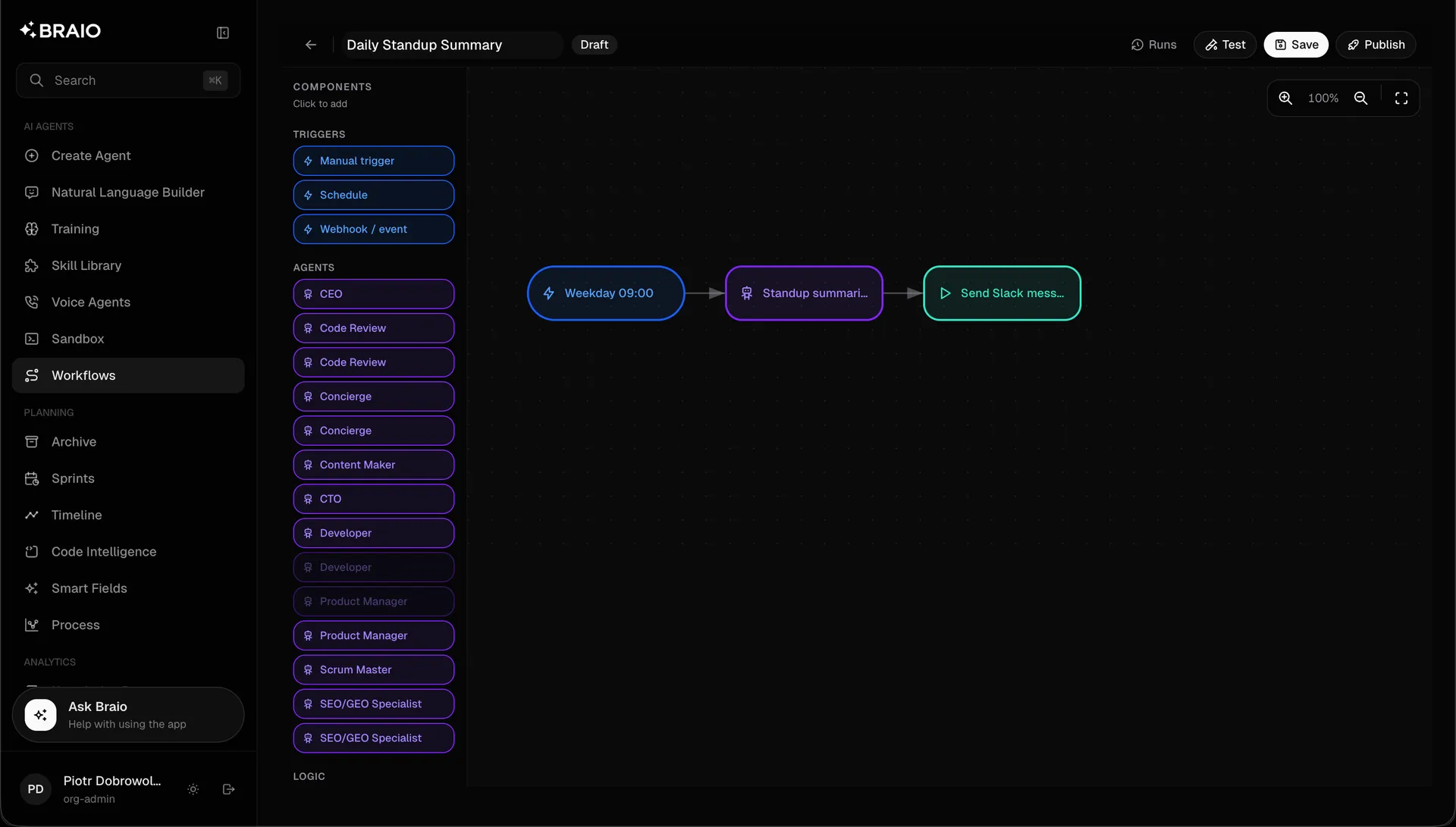
- You build the “Weekday 09:00 → Standup summary → Send Slack message” workflow on a canvas
- Draft → Test → Publish - you check the flow before switching it on
- Run history with diagnostics for every execution
How it works
One loop, six steps
- 01Taskfrom chat, backlog or a schedule
- 02Plan & criteriaexplicit scope, repo, branch, risk level
- 03Your approvala Yes/No gate before anything runs
- 04Executioncode, content or analysis in your tools
- 05Verificationcode review, tests, in-browser QA
- 06Evidence reportscreenshots, timeline, metrics
Approval gate: publishing a workflow needs your sign-off; individual runs follow each action's risk level.
Control
Autonomy on your terms
A Slack summary or a Linear status is level 1 with an audit log entry. A message to a client or a change to the team's schedule waits for approval (level 2).
Scenario · Operations
- Today
- statuses collected over Slack, standups and summaries written by hand
- With Braio
- daily digests and scheduled workflows - the work does itself at 9:00