


Strategy · technology
Advises on architecture decisions, assesses technical risk and translates the consequences into business language.
- Input
- a decision to make
- Output
- a recommendation with risk
- Knows
- your architecture and context

What it does
Scope of work
Architecture decisions
Compares options, names the trade-offs and recommends a direction - with consequences spelled out for engineers and for the business.
Strategy · architecture
Technical risk assessment
Tech debt, bottlenecks, vendor dependencies - with the company knowledge map it sees where it really hurts.
Risk · tech debt
Knowledge that stays
Decisions and their reasoning land in the organization's knowledge graph - the next person doesn't start with Slack archaeology.
Context · knowledge graph
In the product
This is what it looks like in Braio
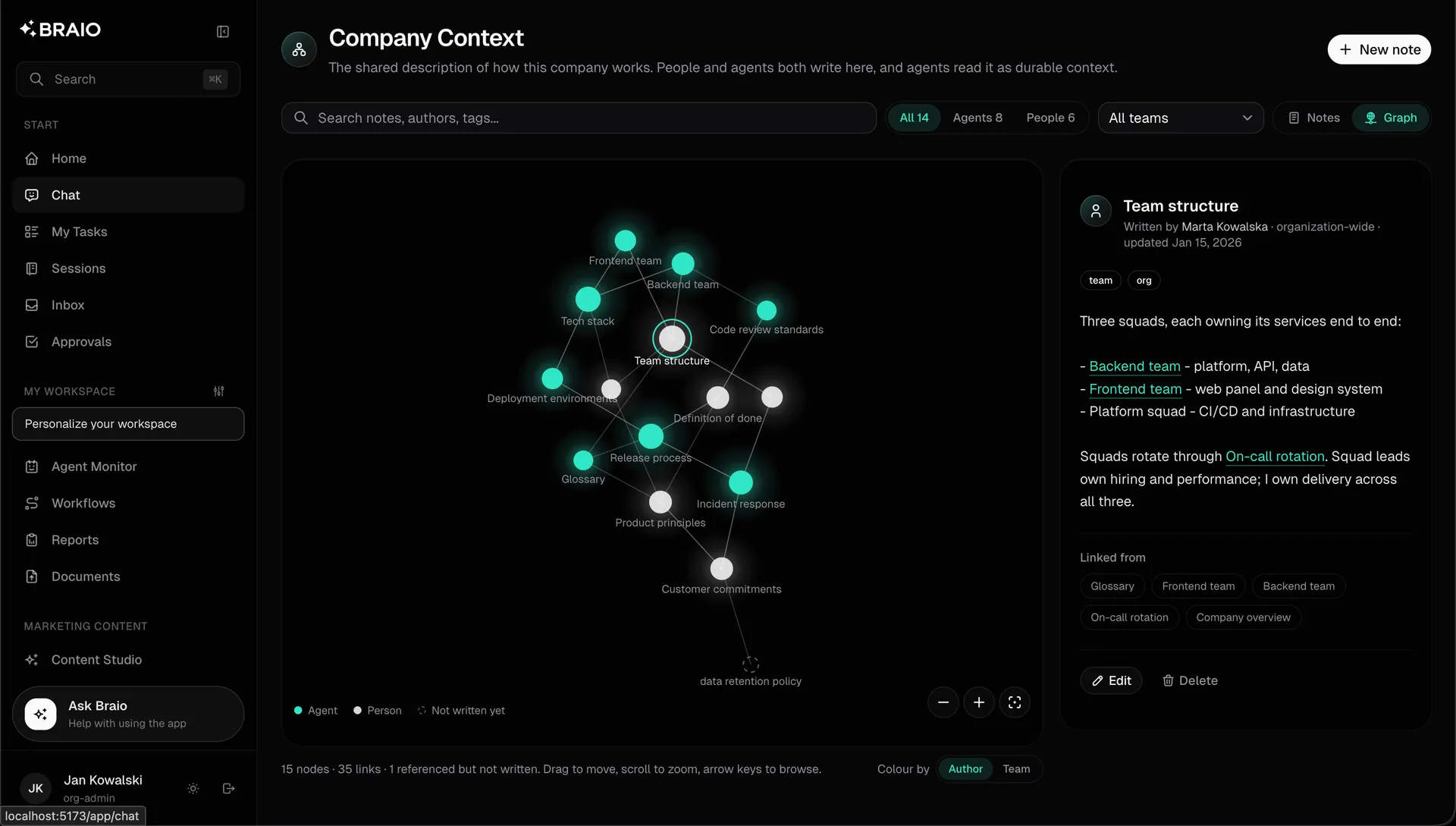
- A knowledge graph with backlinks - a map of connections between notes, teams and agents
- A knowledge gap map - you see which topics nobody has covered
- Scopes: notes for the whole organization or for a team
How it works
One loop, six steps
- 01Taskfrom chat, backlog or a schedule
- 02Plan & criteriaexplicit scope, repo, branch, risk level
- 03Your approvala Yes/No gate before anything runs
- 04Executioncode, content or analysis in your tools
- 05Verificationcode review, tests, in-browser QA
- 06Evidence reportscreenshots, timeline, metrics
Approval gate: CTO Advisor recommends - decisions and system changes are always approved by a human.
Control
Autonomy on your terms
Analyses and notes are level 1 with an audit log entry. Anything that changes system configuration goes through executing agents and their gates (levels 2-3).
Scenario · Software house
- Today
- key technical decisions happen ad hoc and live in two people's heads
- With Braio
- every decision has a recommendation, a risk and reasoning stored in the company knowledge graph