


Product · backlog & priorities
Keeps the backlog in order, proposes sprint scope based on velocity and makes sure the team works on what matters most.
- Input
- backlog and velocity
- Output
- sprint scope + a forecast
- Metrics
- Monte Carlo · CFD · burndown

What it does
Scope of work
Keeps the backlog in order
Duplicates, missing acceptance criteria, tasks without value - the backlog stops being a wishlist and becomes a plan.
Product · priorities
Forecasts instead of promises
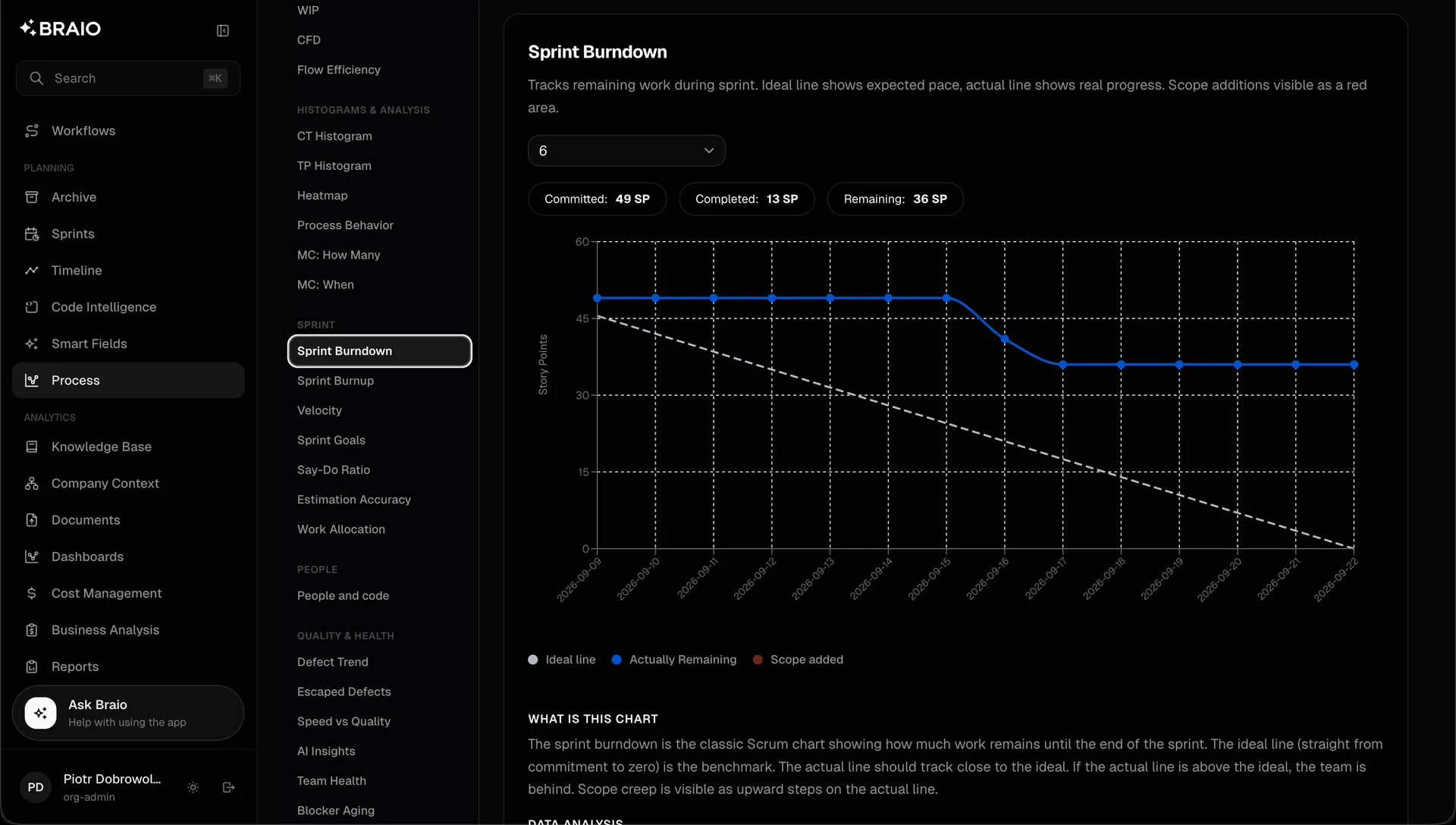
Monte Carlo, CFD and burndown with an explanation next to every chart. “Will we make it?” gets an answer with a confidence interval.
Processes · facts, not declarations
Sprint scope from velocity
Proposes scope based on the team's real pace and makes sure the sprint gets the highest-value work.
Sprint · value over wishlist
In the product
This is what it looks like in Braio
- Sprint burndown: 49 SP committed, 13 SP done, 36 SP left - live
- Quality next to pace: bugs, blocker age, team health
- A “what this chart shows” section next to every metric
How it works
One loop, six steps
- 01Taskfrom chat, backlog or a schedule
- 02Plan & criteriaexplicit scope, repo, branch, risk level
- 03Your approvala Yes/No gate before anything runs
- 04Executioncode, content or analysis in your tools
- 05Verificationcode review, tests, in-browser QA
- 06Evidence reportscreenshots, timeline, metrics
Approval gate: it proposes priority and scope changes - a human approves them.
Control
Autonomy on your terms
Analyses and reports are level 1. Changing sprint scope in Jira/Linear or messaging stakeholders goes through approval (level 2).
Scenario · Software house
- Today
- guesswork estimates and sprints planned by the loudest voice
- With Braio
- sprints run on Monte Carlo forecasts, and the backlog has measurable value and a realistic scope